Buyer-side network and interface checklist

Keystone jack price checklist before you accept an alternate

Lock these fields

Write the category limit you will test, T568A or T568B, a shielded shell or an unshielded body matched to the cable, the opening (decorator plate, panel, or surface box), and the termination (110 IDC or toolless clamp).

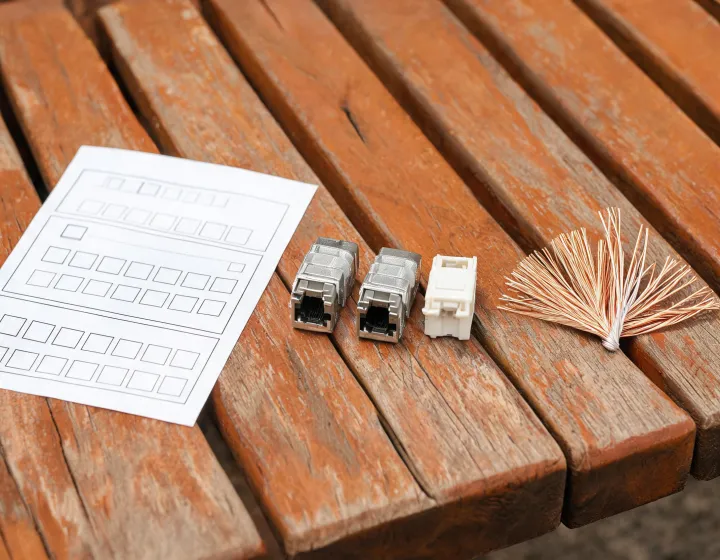
Checklist card beside keystone jacks and a continuity tester lead

Leave these open on purpose

Leave plating thickness open until the drawing states microinches, such as 50 microinches (1.27 micrometers). Leave lot sampling, color, icons, freight, and the supplier lean (high-end, mid-range, budget, or undecided) open until you actually know them. Frequency range stays 250 MHz or 500 MHz with the category. Impedance stays a supplier statement near 100 ohms. Contacts stay 8P8C. Insertion loss and return loss stay on the model sheet. Connector mating cycle stays blank unless you require a count. Power over Ethernet stays a watt clause, 15.4 W, 30 W, 60 W, or 90 W, when the drop carries power.

Evidence ledger for one proposed jack

A keystone jack price without this ledger is a headline. Bind every electrical claim to the manufacturer and model on the quote. Family photos and “typical” curves stay in the question column.

CheckAsk the supplier to showDo not treat as proof
Frequency range The megahertz span used for the cited insertion loss and return loss A category word with no test sheet
Crosstalk NEXT, and alien-crosstalk context when the request is Cat6A A Cat6 sheet reused on a Cat6A line
Contacts Plating note and a connector mating cycle figure if the spec requires one Housing color or a stock photo
Power over Ethernet Current per contact and the temperature-rise condition, if the drop carries power A “PoE” icon with no ampere or watt context
Identity Model, revision, and country of the document’s date A compatible label that does not name the mold

Specified brand versus compatible body

The specified housing may match a panel warranty or a facilities standard. A compatible body may be acceptable when the opening, the IDC, and the test limits are the same and the buyer allows the alternate in writing. Verify fit on the named plate. Do not assume interchange because both parts are called keystone. This is the same kind of buyer choice people argue for coded versus compatible modules, scaled down to a passive jack: support path and marking matter, and neither side is pre-approved here.

New versus surplus

New jacks should arrive with intact contacts and a traceable carton. Surplus or pulled jacks need a condition statement: unused, reseated, or unknown. Mating-cycle claims from a new-part datasheet do not transfer to a pulled part. If you cannot accept unknown wear, say that before the price is compared. Refurbished language from active network gear is a poor fit; for jacks the practical split is new production versus secondary-market condition.

Arguments that do not belong on this card

Managed versus unmanaged is about switch software and visibility. Single-mode versus multimode is about fiber and wavelength. Neither selects a keystone. Rack unit and runtime belong to infrastructure cabinets and power equipment. If someone pastes those words into a jack RFQ, move them to another line so they cannot dilute the keystone jack price.

Open choices to close before the alternate is accepted

Which specification choices are still open?

Any blank among category, pinout, shield, termination, opening, plating, quantity, and destination is still open. Impedance should be whatever the supplier’s test states, not a number copied from memory. Gauge, pair count, jacket, length, and bend radius stay on the cable side of the checklist even when the purchase order is combined.

What should the buyer verify before accepting an alternative?

Same opening geometry, same contact count, a written deviation for plating and shield, and a test sheet for the alternate model rather than the model you first named. Check that the pinout chart the installer will use was not swapped. Check pack quantity so a “each” price and a “bag of 50” price are not treated as equal units.

How do standards enter the checklist?

Use the TIA-568 overview to remember category and pinout vocabulary. It is not a substitute for the current standard your contract may require, and it does not certify a factory. FCC authorization and safety marks, when they apply to a powered device rather than a passive jack, stay off this card unless the proposed part actually carries them. Ask; do not assume.

Where does the checklist go next?

Carry completed rows to the inquiry options or the requirement desk. The article is the long form of the same buyer task.

Submit the checklist as text

Copy finished rows into the requirements field. There is no upload control, and a missing row is not guessed. A blank plating cell should remain blank. Budget and supplier preference are optional and do not close a technical gap.

LinkScope Sourcing 26 will use that text to request factory quotations. You keep the decision on alternates, surplus condition, and whether the test sheet is enough.